When investigators reached Adrian Lim’s flat in Block 12, Toa Payoh Lorong 7, he had an explanation for the red droplets they had followed: candle wax.
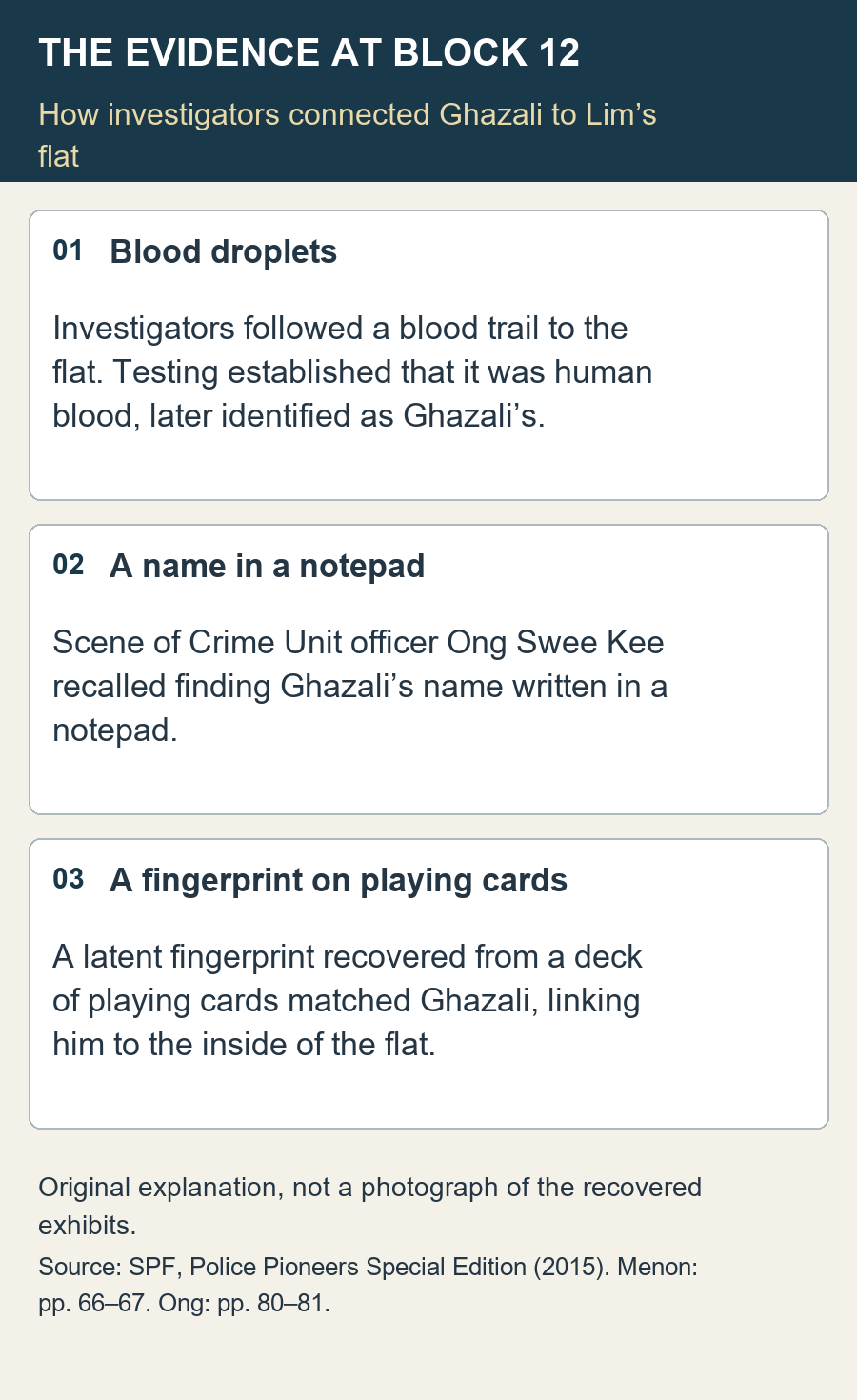
Veteran investigator S. K. Menon later recalled noticing that there were no red candles in the flat. Lim changed his account to chicken blood. A chemist established that the stains were human blood, subsequently identified as belonging to Ghazali Marzuki.
That account, preserved in the Singapore Police Force’s 2015 Police Pioneers Special Edition, cuts through the mythology surrounding the Toa Payoh ritual murders. Behind the occult claims was an investigation built on physical evidence, followed by a trial in which the killings themselves were admitted.
Two children, nine-year-old Agnes Ng Siew Heok and 10-year-old Ghazali, had been murdered. Understanding what happened means following the trail from the neighbourhood to the flat, and then into a courtroom where responsibility, psychiatric evidence and public fascination collided.
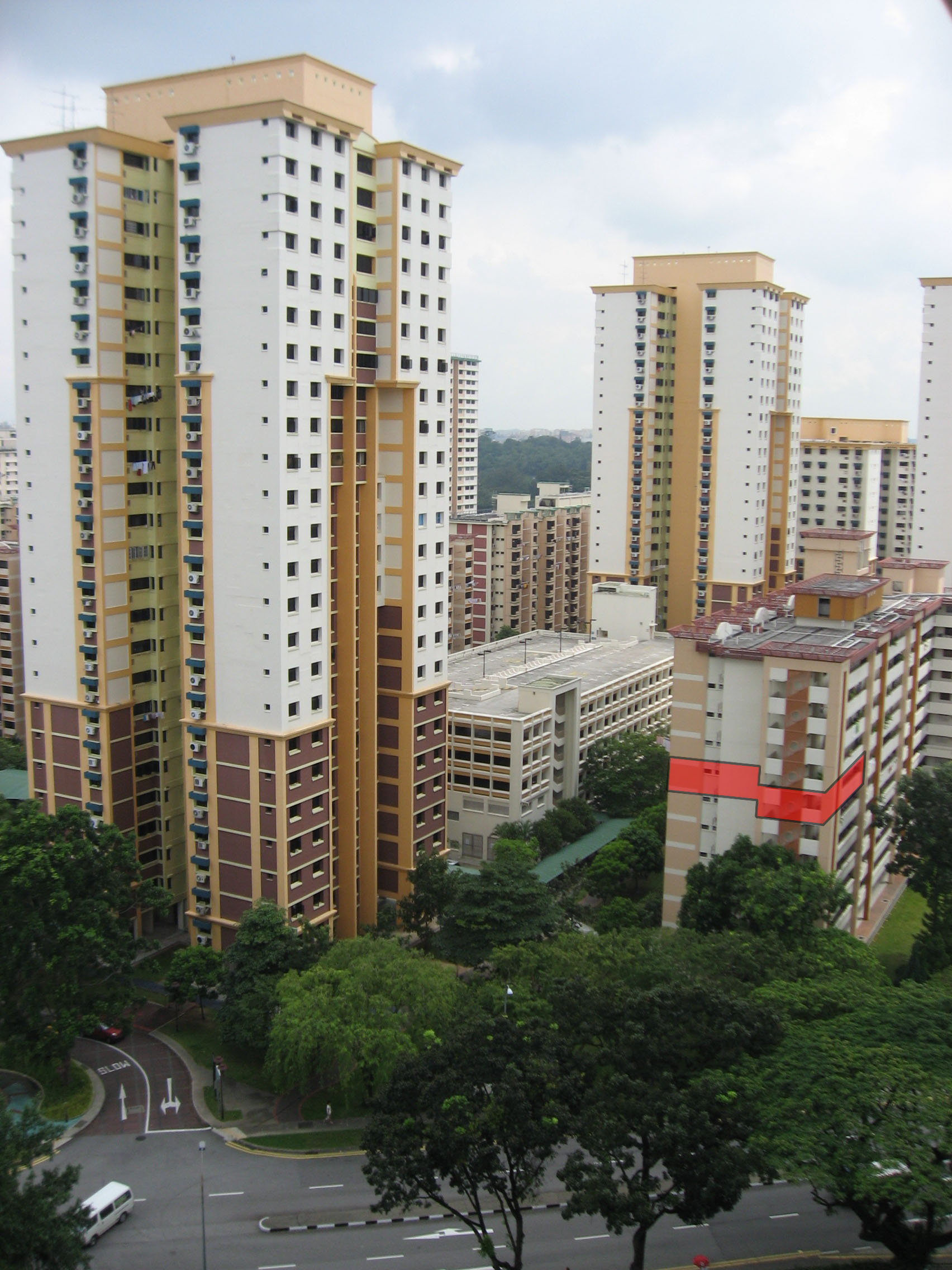
Featured photograph: Block 12 is the smaller block at right, with the former flat location marked in red by the original photographer. Jappalang photographed it in November 2008, after neighbouring Blocks 10 and 11 had been redeveloped. It is a later location photograph, not a 1981 crime-scene image. Original photograph and credit; CC BY-SA 3.0.
The Man Behind the Flat’s Closed Door
Lim had worked for Rediffusion before presenting himself as a medium. The Court of Appeal’s account describes an operation involving amulets, supposed treatments and electrical shocks. His claims of supernatural authority helped him obtain money, sex and obedience.
Catherine Tan Mui Choo became his wife in 1977. Hoe Kah Hong came into his circle through supposed spiritual treatment and became another of his “holy wives”. Those relationships were part of the prosecution’s explanation of his influence, but did not remove the need to assess each accused’s responsibility separately.
The appellate judgment records that a rape complaint against Lim prompted police questioning. Angry about that investigation, he spoke of killing children to create trouble for the police. This was a complaint under investigation, not a rape conviction established in these murder judgments.
The familiar word “ritual” therefore needs care. Occult practices formed part of the case, but the court also identified planned revenge and an attempt to confuse the police. The label alone cannot explain the murders.
Agnes, Then Ghazali
Agnes was a Primary 3 pupil and the youngest of nine children. Ghazali was in Primary 4 and the eldest of three. These family details appear in the National Library Board’s BiblioAsia account; they are a reminder that the children had lives beyond the crime that made their names public.
On 24 January 1981, Hoe brought Agnes from a playground near a church in Toa Payoh to Lim’s flat. On 6 February, she brought Ghazali from Clementi. The Court of Appeal records that both children were drugged and drowned, with all three accused participating. Agnes was also sexually assaulted.
Agnes’ body was found near the lift at Block 11 the following morning. Ghazali’s was discovered beneath a tree near Blocks 10 and 11 on 7 February. The second discovery gave investigators the blood trail that brought them to Block 12.
A Notepad, Playing Cards and the Scene of Crime Unit
Reaching the flat was only one part of the investigation. Officers still needed evidence connecting the children to its interior.
SPF’s retrospective credits Ong Swee Kee, a founding officer of the Scene of Crime Unit, with identifying two important exhibits: a notepad bearing Ghazali’s name and a latent fingerprint on a deck of playing cards that matched the boy’s print.
These were ordinary objects with extraordinary evidential value. A name could connect a child to the household; a matching fingerprint could establish his contact with an object recovered there. Together with the blood evidence, they gave investigators a tangible account to test against statements and other findings.
NLB’s account describes further discoveries in the flat, including papers with children’s names and telephone numbers, bloodstained religious objects, and material about witchcraft and human sacrifice. Lim, Tan and Hoe were arrested on 7 February and charged shortly afterwards.
Ong’s work also connects this investigation to an earlier case in Singapore’s criminal history. SPF records that his fingerprint expertise identified Lim Ban Lim after the gunman’s death in 1972, despite an identity card bearing another name. Read our account of Lim Ban Lim and the police operation that ended his years on the run.
Inside a Courtroom Everyone Wanted to Enter
The murder trial occupied 41 hearing days. Chua J and T. S. Sinnathuray J sat together under the procedure then used for capital trials. Glenn Knight and Roy Neighbour prosecuted. Howard Cashin, assisted by Choo Han Teck, defended Lim; J. B. Jeyaretnam represented Tan, and Nathan Isaac represented Hoe.
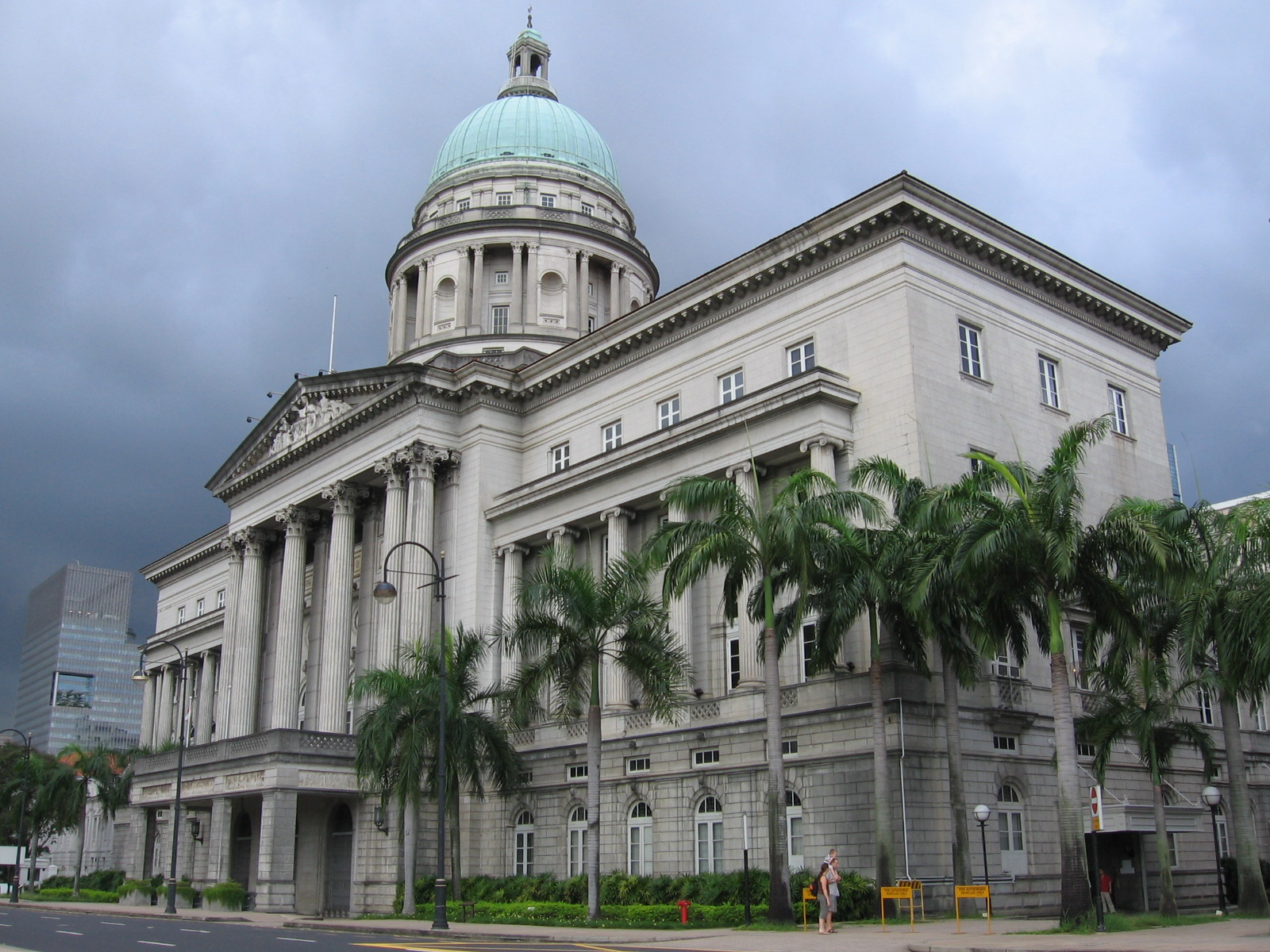
Choo later recalled seeing the crowd when the accused first appeared in court and remarking to Cashin that he pitied whoever had to defend them. Cashin was subsequently appointed, and Choo became his assistant. The irony survives in the Singapore Academy of Law’s oral-history account.
During the trial, seats in the public gallery were so sought after that admission numbers were allocated. In SAL’s second instalment, Choo recalled that people admitted for the morning were not allowed back for the afternoon, giving another group a turn.
Other recollections show how the atmosphere affected participants. Knight remembered a witness wearing protective amulets and being frightened to look at Lim. Cashin recalled threatening telephone calls and police protection for himself and defence psychiatrist Dr Wong Yip Chong.
These are later accounts by participants, not fresh findings by the murder court. They illuminate the pressure around the proceedings without making supernatural claims evidence of supernatural powers.
The Question Was Responsibility, Not Who Had Killed
The High Court’s judgment of 25 May 1983 states that the accused admitted the facts of the killings from the outset. Their common intention and participation were not in doubt.
The main defence was diminished responsibility: whether an abnormality of mind substantially impaired each accused’s mental responsibility at the time. Hoe also raised insanity, which the court rejected. A past diagnosis or unusual belief did not automatically establish either defence.
The judges found no psychiatric illness in Lim at the relevant time. They rejected Tan’s claim that she was suffering from reactive depressive psychosis during the killings. Hoe had previously received treatment for schizophrenia at Woodbridge Hospital, but the judges found remission before the murders and no substantial impairment of responsibility.
SAL’s oral histories preserve the disagreement behind those findings. Defence psychiatrists and lawyers took a different view of the accused’s mental condition from the prosecution. Choo recalled repeated visits to Lim in Queenstown Remand Prison; Knight recalled intensive preparation to challenge the psychiatric evidence. The published judgments record how the courts resolved that dispute.
The Verdict, Appeals and Executions
All three were convicted of murder and sentenced to death. NLB describes the crowds outside the Supreme Court and cheering when news of the verdict reached them. That public reaction is part of the case’s history, rather than a measure of whether the legal decision was sound.
| Date | Established Event |
|---|---|
| 24–25 January 1981 | Agnes was killed on 24 January; her body was found on 25 January. |
| 6–7 February 1981 | Ghazali was killed on 6 February; his body was found and the three accused arrested on 7 February. |
| 25 May 1983 | High Court judgment: all three convicted of murder. |
| 4 August 1986 | Tan’s and Hoe’s appeals dismissed. Lim did not appeal. |
| 25 November 1988 | All three executed at Changi Prison, according to NLB. |
Tan and Hoe appealed their convictions; Lim did not. On 4 August 1986, the Court of Appeal dismissed both appeals after examining the psychiatric evidence and the women’s conduct before, during and after the murders.
SAL’s account also records a less public part of the years that followed: Sister Gerard Fernandez visited the women on death row over seven years. The executions took place on 25 November 1988, almost eight years after the children’s deaths.
The case is often remembered through Lim’s performance as a medium and the crowds it attracted. Its documentary record offers a firmer way to understand it: the children’s movements, the evidence recovered by investigators, and the courts’ separate assessments of the three defendants. Agnes and Ghazali should remain at the centre of that account.
Sources and Editorial Notes: Public Prosecutor v Adrian Lim and Others [1983] SGHC 24 (25 May 1983); Tan Mui Choo and Another v Public Prosecutor [1986] SGCA 10 (4 August 1986); SPF, Police Pioneers Special Edition: 50 Stories of Loyalty and Service (2015, pp. 66–67 and 80–81); Singapore Academy of Law’s legal-history accounts, Part 1 (11 April 2021) and Part 2 (21 April 2021), drawing on oral histories; and NLB BiblioAsia, “Murder Most Malevolent” (July–September 2017). Checked 30 September 2026, Singapore time. The children’s ages follow SPF and NLB (nine and 10); the appellate web text gives different ages. Killing dates follow the court judgment and are distinguished from discovery dates. Police and courtroom anecdotes are explicitly attributed to later retrospectives.